
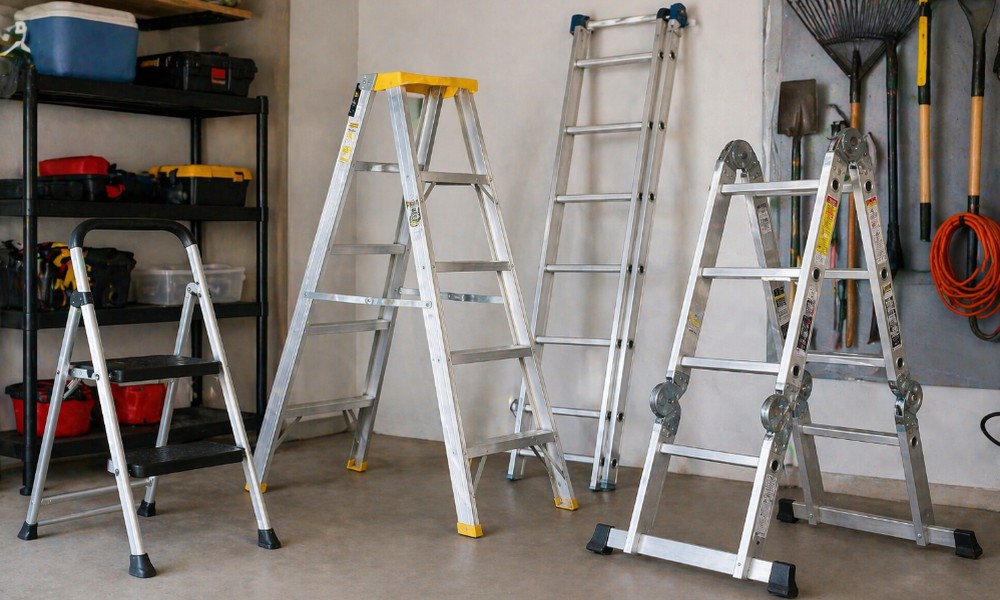
A ladder seems like one of the simplest tools you can buy for your home. You need to reach something high, so you get a ladder. Easy enough. But once you start looking, it gets a little more confusing than most people expect. There are step ladders, extension ladders, platform ladders, different materials, different heights, and different weight ratings. Suddenly it is not just about grabbing the first one you see.
Choosing the right ladder for home use matters more than people think. The wrong ladder can make a job harder, less stable, and honestly more dangerous than it needs to be. The right one makes simple tasks like changing a light bulb, painting a wall, cleaning gutters, or trimming branches feel much easier and safer.
The first thing to think about is what kind of jobs you actually need the ladder for. That sounds obvious, but it helps narrow things down fast. If you mostly need a ladder for indoor jobs like reaching high shelves, changing air filters, or painting a room, a step ladder is usually the best fit. Step ladders are self-supporting, easy to move around, and great for flat indoor surfaces. They are often the most practical choice for everyday household use.
If you need to reach your roofline, clean gutters, or work outside on taller parts of the house, an extension ladder may make more sense. Extension ladders are built for height and can reach places a step ladder cannot. They do need to lean against a stable surface, though, so they are not as simple to use indoors. For many homes, the best setup is actually having both a small step ladder for regular tasks and a taller extension ladder for outdoor work.
Another good option for some homeowners is a multi-position ladder. These ladders can often be adjusted into different shapes and heights, which makes them flexible for a range of jobs. They can be useful, especially if storage space is limited. Still, they are sometimes heavier and a little more complicated to set up. Some people like that flexibility. Others just want something simple they can grab and use right away.
Height is another major factor. A lot of people assume they should buy the tallest ladder they can afford, just in case. But that is not always the smartest move. A ladder should match the reach you actually need. If the ladder is too short, you may be tempted to stand too high on it, which is unsafe. If it is too tall, it may feel awkward to carry, store, and position.
For step ladders, a common size for home use is around 4 to 6 feet. That usually works well for indoor ceilings, cabinets, and light fixtures. For extension ladders, the size depends more on the height of your home and the outdoor tasks you expect to do. It helps to think about your maximum reach, not just the ladder’s listed size.
Material matters too. Most home ladders are made from aluminum, fiberglass, or wood, though wood is less common now for general household use. Aluminum ladders are lightweight and easy to carry, which makes them popular for everyday tasks. They are often a good choice if you want something simple and portable. The downside is that aluminum conducts electricity, so it should not be used near power lines or electrical work.
Fiberglass ladders are heavier, but they do not conduct electricity the same way aluminum does. That makes them a better choice for jobs where electrical safety might be a concern. They are often very durable too. The tradeoff is weight. A fiberglass ladder can feel like a lot if you are moving it around often. So really, the best material depends on what kind of jobs you expect to do most.
Weight capacity is one of the most important details, and people sometimes overlook it. Every ladder has a duty rating, which tells you how much weight it is designed to support. That includes not only your body weight, but also your tools, paint cans, supplies, and anything else you are carrying. Choosing a ladder with the right duty rating helps make sure it performs safely under real working conditions.
It is usually better to choose a ladder with a little extra capacity rather than one that barely meets your needs. That gives you more confidence and a better margin of safety. A ladder may look sturdy, but the rating is what really tells you what it is designed to handle.
Storage is another practical thing to consider. A large extension ladder may be useful, but if you have nowhere to keep it, that can become frustrating fast. Before buying, think about where the ladder will live. Garage wall space, shed space, and even how easy it is to lift into place all matter. A ladder that is too bulky to store conveniently may end up being more annoying than helpful.
Safety features are worth paying attention to as well. Non-slip feet, wide steps, secure locking hinges, and sturdy spreaders can all make a difference. For step ladders, a top platform or tool tray can be helpful too. These small features may not seem exciting when shopping, but they often improve comfort and stability once you are actually using the ladder.
It is also important to use the ladder correctly. Even the best ladder cannot make up for poor setup or risky habits. A ladder should always be placed on a stable, level surface. You should avoid overreaching to one side, and you should never stand on the top step unless the ladder is specifically designed for that. Sometimes the problem is not the ladder itself, but how it is being used.
In the end, choosing the right ladder for home use comes down to a few simple questions. What jobs do you need it for? How high do you need to reach? Do you want something lightweight, or something better suited for electrical safety? What weight capacity do you need? And where will you store it?
The best ladder is not always the biggest or most expensive one. It is the one that fits your home, your projects, and your comfort level. A good ladder should help you feel steady, prepared, and safe while you work. And really, that is what most homeowners want. Just a reliable tool that does its job well when it is needed.
This post was written by a professional at Anawalt Lumber. Anawalt Lumber is a family-owned lumber yard and hardware store serving Los Angeles for over a century. Known for quality lumber, contractor supplies, Hollywood hardware store, and a full-service nursery, Anawalt provides personalized service for homeowners and licensed contractors. From job pricing and bulk discounts to special-order materials with fast delivery, Anawalt is your trusted local building supply partner in Malibu, West LA, and Hollywood.