
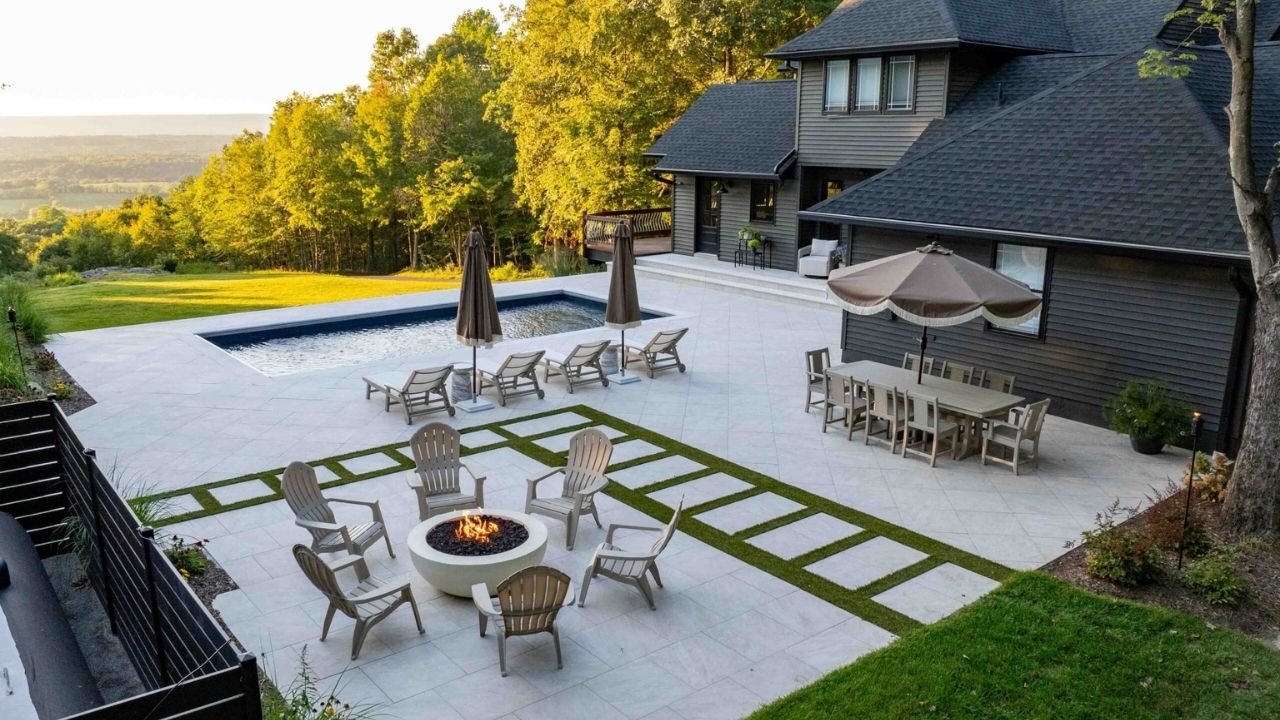
Chicago’s climate is a test of any hardscape: lake-effect snow, freeze–thaw cycles, blazing summer sun, and the stray week of spring rain that never seems to end. Homeowners weighing patio upgrades, rooftop decks, or seamless indoor–outdoor floors keep landing on the same solution, porcelain pavers. As searches for “Porcelain Pavers Chicago” climb, it’s not just a trend: it’s a pragmatic shift. This guide breaks down why porcelain pavers outperform traditional materials locally, how they elevate both interiors and exteriors, and what makes them a low-maintenance, style-forward choice in 2025. View all size and finish options at local showrooms and suppliers to see what fits a specific project best.
Durability of porcelain pavers in Chicago’s climate
Porcelain pavers are engineered for harsh conditions, which makes them a natural fit for Chicago weather. The core advantage is their density and minimal water absorption, typically less than 0.5%. That means moisture can’t easily penetrate the body of the paver, so when temperatures swing and freeze–thaw cycles kick in, there’s far less risk of spalling, cracking, or surface flaking than with many natural stones or standard concrete pavers.
Slip resistance is a common concern for icy winters. Outdoor-rated porcelain pavers usually carry textured, micro-grip surfaces (often comparable to R11 classifications), giving feet traction when patios, walks, or roof decks get wet or frosty. In summer, porcelain’s colorfast glazes and pigments resist UV fading, so a charcoal or limestone-look patio looks as sharp in August as it did in May.
Installation methods also help counter seasonal movement. On-grade patios can be set over compacted base with a sand or permeable bedding layer, allowing tiny shifts without telegraphing cracks to the surface. Rooftop or balcony projects often use adjustable pedestals that create level surfaces above membranes, ideal for Chicago’s flat roofs, while letting water drain freely and keeping the pavers isolated from thermal shock. They’re also lighter per square foot than poured concrete, a plus for structural load.
For driveways, many manufacturers offer thicker profiles (30mm/1-1⁄4″) or specific vehicular-rated lines. When correctly specified and installed, these stand up to parked vehicles and snow removal equipment. And unlike some natural stone, porcelain handles de-icing salts well because its surface is vitrified and non-porous. Just confirm joint materials and nearby metals are compatible with salt use.
Net result: in a city famous for weather mood swings, “Porcelain Pavers Chicago” isn’t just an SEO phrase, it’s shorthand for materials that survive the year without a lot of drama.
Indoor and outdoor applications for modern designs
Designers in Chicago increasingly treat the threshold between inside and out as optional. Porcelain pavers make that seamless vision practical.
On the exterior, they shine on patios, terraces, and rooftop decks, especially on pedestal systems common across city flats and condo buildings. Those pedestals hide utilities, improve drainage, and allow quick access for repairs. Balconies benefit from the same approach, trading cold, uneven concrete for level, finished flooring that looks like stone or wood. Around pools and hot tubs, the textured grip and cool-to-the-touch surfaces are welcome in short summers when every swim day counts.
Indoors, coordinating porcelain tiles extend the look into mudrooms, garden-level entries, sunrooms, and kitchens. Homeowners can run a 24×24 concrete-look tile inside and a matching 20mm paver outside for a nearly continuous aesthetic, ideal with big sliders or folding doors. Basements with radiant heating also pair well with porcelain: it’s an excellent conductor, and the low porosity resists common basement moisture issues.
The material adapts to varied styles. A classic Chicago bungalow might use brick-look planks in a herringbone on the front walk, then echo the pattern in a foyer tile. A modern loft can go full minimal with oversized 24×48 cement-look slabs inside and out. Suburban yards get durable fire pit zones, dining courts, and grill surrounds that handle heat and grease without staining.
Even tricky details are covered. Many collections include stair treads, bullnose edges, and trim pieces for clean transitions at steps, planters, and coping. And for winter convenience, porcelain is compatible with electric or hydronic snow-melt systems when installed to spec, no more shoveling a favorite path at 6 a.m.
Low-maintenance benefits compared to traditional materials
Maintenance often decides the winner between hardscape options. Porcelain usually wins.
Unlike many concrete pavers and natural stones, porcelain pavers don’t require sealing to resist stains or reduce water absorption. Even challenging spills, grease near the grill, fallen berries, red wine, generally sit on the surface and clean up with a mild detergent. The dense body resists oil penetration and rust marks far better than soft limestone or concrete. UV-stable color means there’s no annual routine to keep fading at bay.
Concrete pavers can experience efflorescence and surface wear: natural stone often needs periodic sealing to guard against moisture and winter salts. Porcelain sidesteps both. Routine care is simple:
- Sweep debris before it grinds underfoot.
- Rinse with a hose or use a gentle pressure wash when needed.
- Spot-clean oils with diluted neutral cleaner.
Weed growth is reduced when joints are grouted or filled with quality polymeric sand. On pedestal systems, joints are open by design for drainage and won’t trap dirt the same way: periodic rinses are typically enough. Snow removal is straightforward with plastic-blade shovels or snow blowers: de-icing salts won’t harm the porcelain surface, though joint materials should be compatible per manufacturer guidance.
For many homeowners doing the math on time and lifetime cost, “Porcelain Pavers Chicago” translates to fewer Saturday chores and better-looking surfaces year after year.
Aesthetic versatility in patterns, textures, and colors
Porcelain pavers are style chameleons. Advances in digital printing and surface texturing allow convincing stone-, wood-, brick-, and terrazzo-looks, without the upkeep that those materials often demand.
Patterns: Rectified edges and precise sizing mean tight, consistent joints and layout flexibility. Designers lean on:
- Herringbone for energy and movement with 12×24 or plank formats.
- Ashlar and modular patterns for stone-looks that feel natural, not repetitive.
- Stacked or large-format grids for clean, modern lines in lofts and contemporary homes.
Textures: Outdoor-rated finishes add subtle micro-texture for grip yet stay comfortable underfoot. Homeowners can choose between slightly brushed stone looks, wire-brushed wood looks, or silky concrete slabs with just enough bite for Chicago winters. Matching interior finishes (often a smoother R10-style surface) keep the aesthetic continuous from kitchen to patio.
Colors: Neutrals are strong, charcoal, warm greige, buff, and soft limestone tones complement Midwestern light and brick facades. For classic Chicagoland curb appeal, a bluestone-look porcelain in mixed sizes nails the vibe of traditional patios without the tendency for natural cleft stone to delaminate. Brick-look porcelains echo historic masonry on stoops and walks, keeping color consistent where clay can vary batch to batch. And wood-look planks maintain the warmth of weathered oak or cedar without fading or splintering.
Finishing pieces complete the picture. Coordinating stair treads, pool coping, and edge trims maintain detail consistency across stairs, planters, and raised decks. Homeowners exploring “Porcelain Pavers Chicago” will find extensive collections, view all options locally to compare tones in real daylight and against existing brick or siding.