
Warm Midwestern summers make Illinois a hotspot for wasps, hornets, and bees. One undisturbed nest today can become a painful, and expensive, problem by late season. This guide explains which stinging insects most often target Illinois homes, the real dangers unmanaged nests pose, and how professionals remove them safely. It also covers practical prevention during peak months and essential safety steps for families living near active nests. For anyone comparing options, professional Stinging Insect Pest Control offers faster relief, fewer risks, and better long-term protection than DIY sprays, especially when nests are high, hidden, or large.
Common stinging insects that threaten Illinois households
Not every striped insect is a threat, and not every nest should be treated the same way. Accurate identification drives safe, effective control.
- Paper wasps (Polistes): Often the first arrivals in spring. They build open, umbrella-shaped combs under eaves, porch ceilings, playsets, and light fixtures. Generally defensive near the nest.
- Yellowjackets (Vespula): The Midwest’s picnic crashers. They nest underground, in shrubs, or in wall voids. Aggression spikes late summer as they scavenge proteins and sugars.
- Bald-faced hornets (Dolichovespula maculata): Technically large aerial yellowjackets with distinctive black-and-white markings. They build gray, football-shaped nests in trees and on gables.
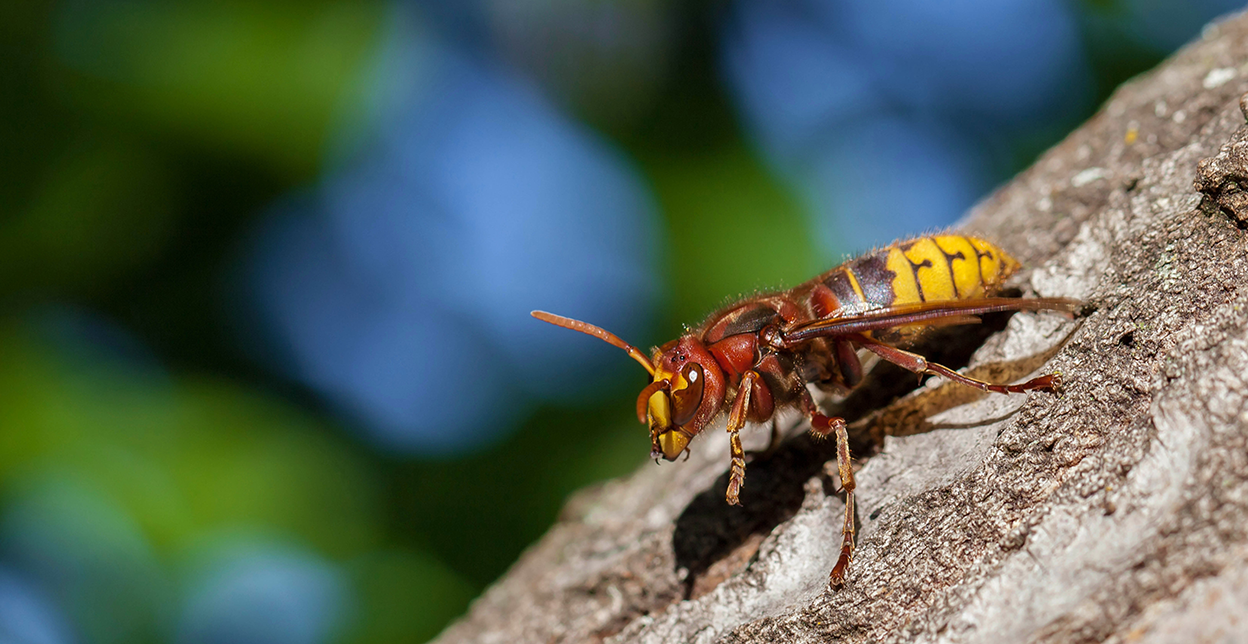
- European hornets (Vespa crabro): Large, mostly brown hornets that can fly at night and hover around windows. They nest in cavities like hollow trees or wall voids.
- Carpenter bees (Xylocopa virginica): Drill near-perfect 1/2-inch holes in unpainted softwoods (soffits, fascia, decks). Males hover and look intimidating but can’t sting: females can if handled.
- Bumble bees (Bombus): Generally mild-mannered pollinators nesting in ground cavities or insulation. Defensive at close range.
- Honey bees (Apis mellifera): Essential pollinators that may swarm in spring and establish colonies in wall voids, soffits, or chimneys. Best handled by live removal and relocation when feasible.
- Cicada killers and other solitary wasps: Enormous but low risk. They dig temporary burrows in sunny, sandy areas. Stings are rare unless trapped or grabbed.
Signs Illinois homeowners see first include steady traffic under an eave, papery combs on rafters, sawdust beneath round holes (carpenter bees), or aggressive wasps circling lawn furniture and trash cans. If they’re unsure, photos from a safe distance help a professional confirm species and recommend next steps. (View all common signs above and compare before approaching.)
Dangers of unmanaged wasp, hornet, and bee nests
A small spring nest can turn into a late-summer hazard. Colonies expand quickly, and behavior changes as food demands rise.
Key risks include:
- Multiple stings and medical emergencies: Yellowjackets and hornets can sting repeatedly. For those with allergies, even one sting may trigger anaphylaxis. Children, older adults, and pets are especially vulnerable.
- Hidden wall-void colonies: Yellowjackets and honey bees inside walls can break into living spaces after DIY sprays, creating chaos and higher treatment costs.
- Lawn and landscaping hazards: Ground-nesting yellowjackets attack when disturbed by mowing, trimming, or kids’ play. A single pass of the mower can provoke the entire colony.
- Structural and cosmetic damage: Carpenter bees tunnel through fascia, rails, pergolas, and decks, inviting woodpeckers that worsen the damage.
- Late-season aggression: By August–September in Illinois, colonies are larger and more protective of food sources. Picnic foods, outdoor trash, and fallen fruit all amplify risk.
DIY attempts with ladders, wasp aerosols, or smoke frequently go wrong, stinging insects may pour from secondary exits, and falls from heights are a real danger. For honey bees, improper chemical use can contaminate wax and honey, attracting new swarms later. That’s why licensed stinging insect pest control is strongly recommended once a nest is established or out of easy reach.
Professional removal techniques for safe control
Professional teams combine species-specific strategies with protective equipment and precise timing to eliminate nests safely and prevent quick re-infestation.
Inspection and identification
- Map flight lines, entry points, and nest size/activity.
- Confirm species (e.g., paper wasp vs. yellowjacket) to choose the right method.
- Check for secondary exits, interior wall voids, and adjacent nests.
Personal protective equipment and timing
- Suits, veils, gloves, and, when needed, full hornet gear.
- Night or pre-dawn treatments for aerial wasps and hornets reduce flight and agitation.
- Safety planning for ladders, rooflines, and electrical lines.
Targeted treatment methods
- Aerial paper wasp and hornet nests: Professionals typically apply a fast-acting product to knock down active defenders, then remove the entire nest and attachment. A light residual may be applied to the mounting site to deter rebuilds.
- Yellowjackets in wall voids: They drill small access points and apply precise dusts or foams that reach the brood without driving insects deeper into the home. After elimination, access points are sealed.
- Ground nests: Marked at dusk and treated when activity is lowest. Dusts are often preferred for full colony penetration.
- Carpenter bees: Treat galleries, allow time for contact with adults and larvae, then plug holes with wood dowels and paint or stain to deter returns.
- Honey bees: When feasible, a live “cut-out” is performed, carefully removing siding or soffit, transferring brood and bees to hive frames, cleaning out wax and honey, and sealing entries. Odor residues are addressed to prevent new swarms. In other cases, a coordinated trap-out or beekeeper referral may be recommended.
Exclusion and follow-up
- Seal gaps 1/8 inch and larger, screen attic and gable vents, repair soffit returns, and caulk utility penetrations.
- Paint or stain unfinished wood (carpenter bee deterrence), and fit tight lids on outdoor bins.
- Provide a written report, photos, and a service warranty or recheck visit, especially for yellowjacket void treatments and honey bee removals.
The result is faster, safer resolution with far less risk of scatter, secondary entrances, or surprise breakouts into living spaces. For homeowners comparing options, this is where professional stinging insect pest control consistently outperforms DIY efforts.
Seasonal prevention practices during peak months
Illinois sees peak activity from late spring through early fall, with July–September the most intense. Smart, seasonal habits reduce encounters and stop nests from taking hold. View all practices below in this quick checklist.
Spring (April–June)
- Inspect eaves, soffits, porch ceilings, playsets, and sheds for starter nests: remove tiny paper wasp nests early.
- Seal gaps around fascia, roof returns, and utility lines: screen attic and gable vents.
- Paint or stain exposed softwoods to discourage carpenter bees.
- Relocate flowering plants away from entryways and play areas.
Summer (July–September)
- Keep outdoor trash tightly sealed: rinse bins monthly.
- Cover food and sugary drinks outdoors: use cups with lids for kids.
- Mow with caution: scan for ground-nest traffic before starting.
- Pick up fallen fruit promptly: move bird feeders away from patios.
- Reduce standing water and dense ivy where nests hide.
Fall and winter prep
- Late season: expect heightened aggression: schedule treatments promptly if activity surges.
- Remove old paper nests during offseason (paper wasps don’t reuse them, but removal discourages site fidelity).
- Caulk and weatherproof before the first hard freeze: store patio furniture cushions and toys to remove cover.
A quick monthly walk-around during warm months prevents small issues from turning into end-of-summer emergencies.